

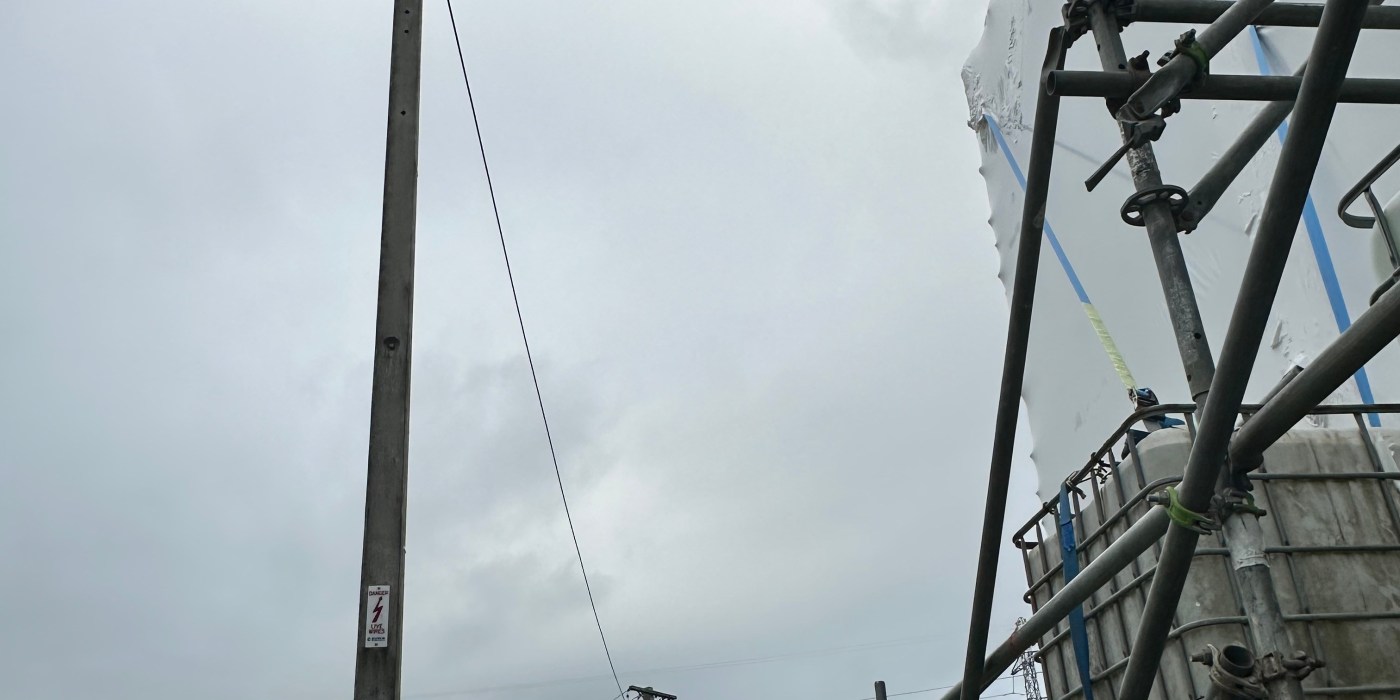
Vector, close approach and safety around overhead power lines
Work near power lines, overhead or underground, is dangerous. Work close to them is regulated for exactly that reason, and the code that governs it, NZECP34, is binary. You either comply or you don’t.
That sounds simple. In practice it is anything but, and getting the interpretation wrong can be extremely costly.
For several months SANZ, through me, has been trying to get some critical compliance tests clarified with Vector. We haven’t managed it. So SANZ has stepped back from reviewing and being involved in Vector’s guidance document for developers.
There is a genuinely good outcome in amongst this. Vector has sourced an independent expert opinion on how terminal poles should be treated. Terminal poles are the ones at the end of a line, the ones you might assume are safe to build close to. They are not. You still need to comply, same as with any other pole. It took months to get that opinion, but we have it on file now, and it may be useful if you’re ever challenged on distances near a terminal pole.
Two tests, not one
There are two separate compliance tests, and mixing them up is where a lot of the confusion, and cost, comes from.
The first is for structures near conductors, the actual power lines, that run beside or below them. The conductors can swing into a structure, so depending on the type of line, a rectangular exclusion zone applies. If your structure, including your scaffolding, fits within Table 2 under normal conditions, you don’t need an engineering report. Worth designing to meet that from the outset.
The second is for people working near anything live, including fittings at the top of a pole. This matters most at a terminal pole. You might think you’re clear, but there can be bits and pieces near the top that bring you closer than you realise. All work, right to the tip of anything you’re holding, has to stay outside a four metre circle around that part.
On terminal poles specifically, the independent opinion Vector obtained says this: sag and wind deviation in the conductors aren’t relevant where the conductors run straight away from the structure, at right angles to it. Where they run off at an angle instead, the first stretch of that run can still be close enough to matter, so check it. A laser measure will do it, though a full site survey that includes the overhead lines is better.
Where this is heading
WorkSafe, through Energy Safety, is apparently working on its own guideline to make the code easier to apply. I don’t know how far along it is. I put material in for it and I’m waiting to see what comes out, because I think it will end up being the national standard everyone works to.
I’d like the industry to end up consistent. For what it’s worth, my own reading of NZECP34 is just the plain reading of the code itself, informed by a science background rather than a legal one. That’s the only “truth” I’m working from.
For the more technical among you
A conductor is the wire strung between two poles. Table 2 measures the safe distance from that wire, and only that wire.
A live part is anything energised. That includes the wire, but it also includes other fittings on a pole that aren’t wires. Section 9, the four metre rule, covers all live parts, not just the wire.
Vector keeps applying the Table 2 wire test to fittings that aren’t wires. That produces a different measurement, and often triggers an engineering report that was never actually needed.
We agree on the method. The rectangle is the right way to measure Table 2. Where we disagree is scope. Vector applies that same rectangle test to fittings on a pole that Table 2 was never written to cover.
Vector itself has confirmed it isn’t following the regulators’ own approach here. Writing to a head contractor on 18 May 2026, copied to WorkSafe and Energy Safety, Vector said:
We are aware that Energy Safety/WorkSafe investigators feel bound by internal guidance to apply a different approach for the purpose of taking enforcement actions. Although we appreciate this, we nonetheless respectfully disagree with any alternative approach for determining Table 2 compliance.
On the method itself, Vector is right. The rectangle is the correct way to measure Table 2. The problem is scope, not method. Vector applies that same test to fittings on a pole that are not conductors, and Table 2 was never written to cover them. I wonder if Vector has had time to digest the expert’s opinion they sought?
