

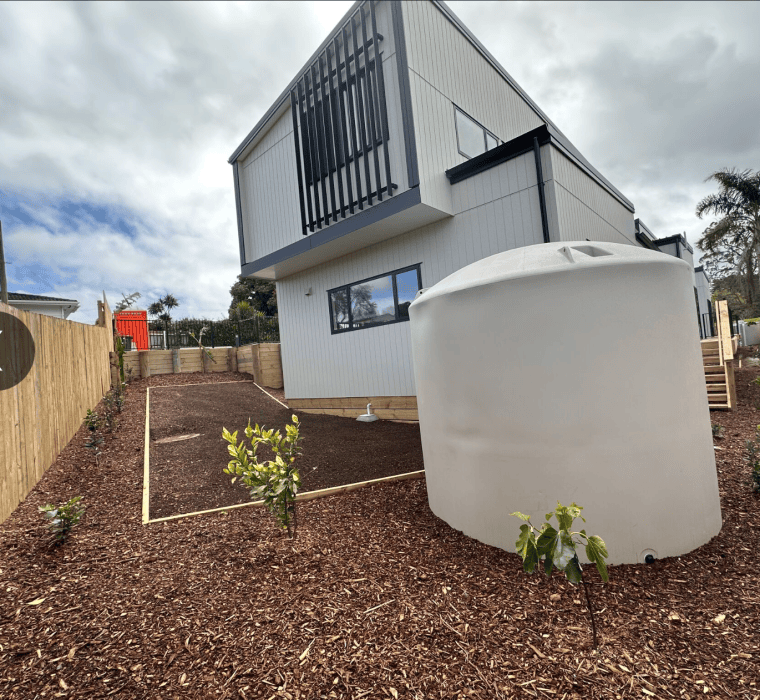
🏆 PRECEDENT SET: Commissioner found Council’s Policy was inequitable in its approach to stormwater development contributions (for compact developments)
After 15 months battling Auckland Council, I have won a 55% reduction in stormwater contributions for my compact homes.
This sets a precedent that could save NZ new build homes collectively millions where the efficient and compact nature of many in-fill modern homes is ignored — effectively discouraged.
I began my campaign in April 2024. At the same time I fronted a bit of a networking push and seemed to gains good traction (the biggest reassessment was from $122,000 to $6,000).
Of course, I thought I would be treated fairly myself… how wrong I was (they wouldn’t let me get by due to the ‘nature of the developer’) … I was outright rejected even on my attempts to show them the logic (right to senior levels).
Why did I battle Auckland Council?
I found something that was factually exceedingly unreasonable. I had evidence to show it was known but not applied. Only those who ‘knew’ got to benefit, those that did not know paid way above their share.
I note that while the process was punitive it was conducted professionally. For me it was doable but not financially viable to engage a formal legal team (I don’t have access to other people’s money).
The Commissioner’s verdict for my main angle of ISA?
😶 Council’s approach was “inequitable” and results in “significant unders and overs.” She would have recommended changing their entire policy if a new one wasn’t already coming (although the new one still needs a change).
😢 The Commissioner also found “it unfortunate that matter was not resolved without the Objector seeking recourse through a formal Objection… there is clear evidence that other developers were being charged reduced amounts”.
😶I also added in the use of detention tanks. This argument was dismissed and I do not intend reviewing it. Other groups may apply a technical review but for the time being, I have achieved a win on my main inequity.
‼️ This precedent should be noted by developers nationwide.
‼️ Councils using flat-rate-per-house policies should switch to surface area-based assessments to fairly recognise compact developments. If they don’t, the smaller the home the greater that portion they unreasonably pay.
The system shouldn’t require a 15-month battle.
For me it wasn’t about the money rather, sometimes you have to fight the fight that benefits everyone when you see the magnitude of the issue.
Overall an incredibly interesting and engaging process…
Even a small time developer can get changes through!
I look forward to the Development Levy system!


